
Chromatic Conspiracies: How Brands Hide Secret Stories in Their Color Palettes

There’s a hidden language in color—a silence underneath the imagery that dictates the way we feel before we even know why. All colors, tints, and gradients convey meaning. And in branding, those meanings are seldom coincidental.
Some palettes throb with nostalgia. Others vibrate with tension or peace. Marketing teams understand this. They stack meaning onto colors, such as encoded messages—color conspiracies intended to guide emotion, perception, and even memory.
Thanks to products like Dreamina, artists are finding new means to express feelings in visuals using its AI photo generator, creating hidden palettes with eerily accurate precision.
Since colors aren’t decoration—they’re art in the guise of persuasion.
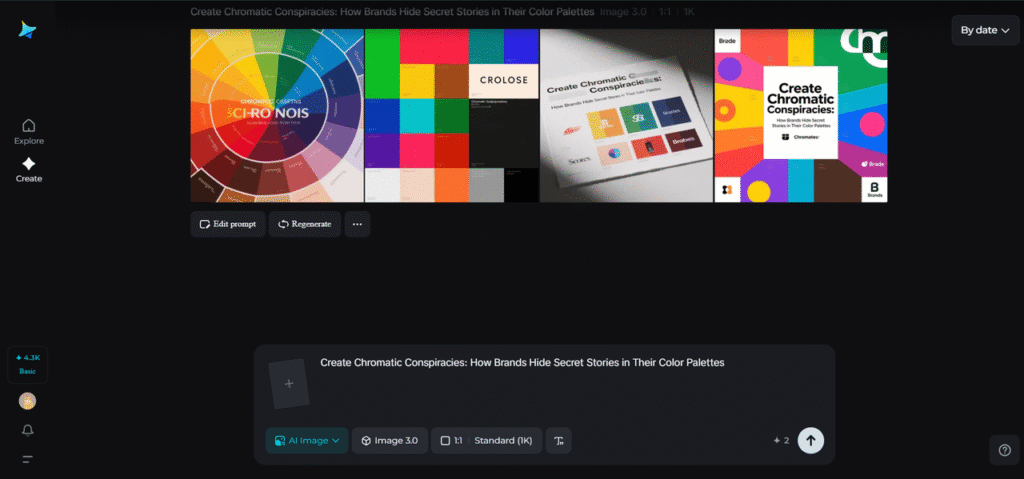
Hidden languages: where emotion conceals itself in hue
Colors have long been psychological devices, yet current branding takes them further. A color today isn’t selected merely for contrast or visibility—it’s chosen for emotion. The pale blue of trust, the beige of calm, the electric violet of curiosity—each is chosen for a purpose beyond the visual.
But what if we said that brands frequently employ pairings of colors to conceal emotional subtext? Subtle shades that only seem “right” because they’ve been scientifically calibrated to reflect particular emotions or cultural allusions.
Consider, for example:
- The “sunset shift”—a transition from burnt orange to plum, a mood of wistfulness and subdued aspiration.
- The “neon calm”—a blend of mint green and dark gray, harmony achieved through contrast.
- The “hidden warmth”—a cold color palette with subtle coral undertones to humanize technology-influenced designs.
It’s these silent harmonies that give color design the feel of psychological architecture rather than surface-level styling.
Brand identity as coded emotion
A color palette is a secret handshake between audience and brand. You may not deliberately recall the color of your favorite coffee shop’s logo, but you recall how it made you feel.
Here’s the secret trick: brands embed emotional codes in their color palettes to convey stories words could not. They employ contrast and blending to suggest values, narratives, or intentions.
- A luxury brand may stack dark jewel tones to suggest depth and heritage.
- A startup may opt for flat, saturated colors to signal speed and simplicity.
- A wellness brand may embrace misty gradients that imply breathing room.
Dreamina allows you to see these feelings in the moment, bringing words on paper to life. You can create your own color stories, blending intuition and tech in what’s almost telepathic.
Even more groundbreaking when paired with the AI logo generator. You are not just coming up with a symbol. You are putting together this whole mood setup. Color and shape and light all team up to get the same kind of story across.
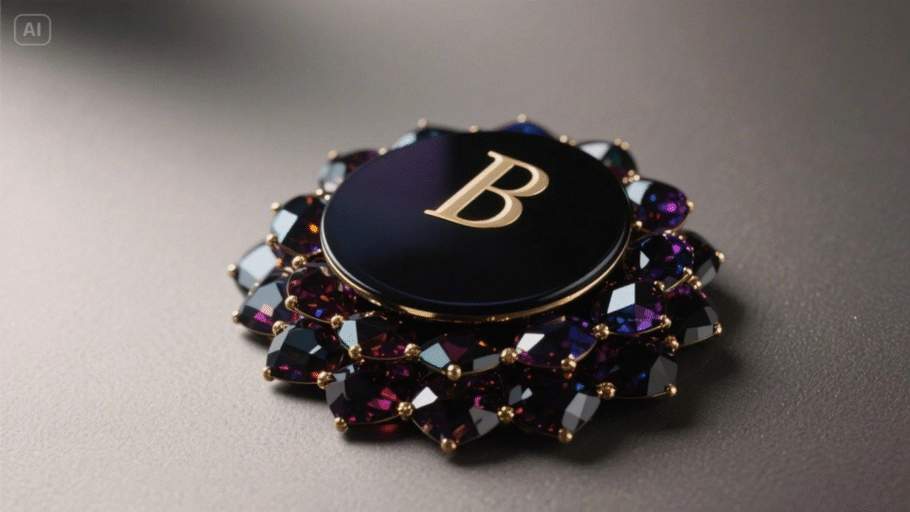
Decoding the secret palette with Dreamina
Dreamina makes color storytelling a feeling-driven creative exercise. The platform translates emotional concepts into visual interpretations that communicate mood, depth, and tone—think painting with emotion rather than paint itself.
Here is how you can find your brand’s unearthed color story, utilizing Dreamina’s creative process:
Step 1: Enter a text prompt
Access Dreamina and begin by describing the mood behind your palette, not necessarily the actual colors. Your text prompt needs to be poetic and descriptive—it serves as your emotional map.
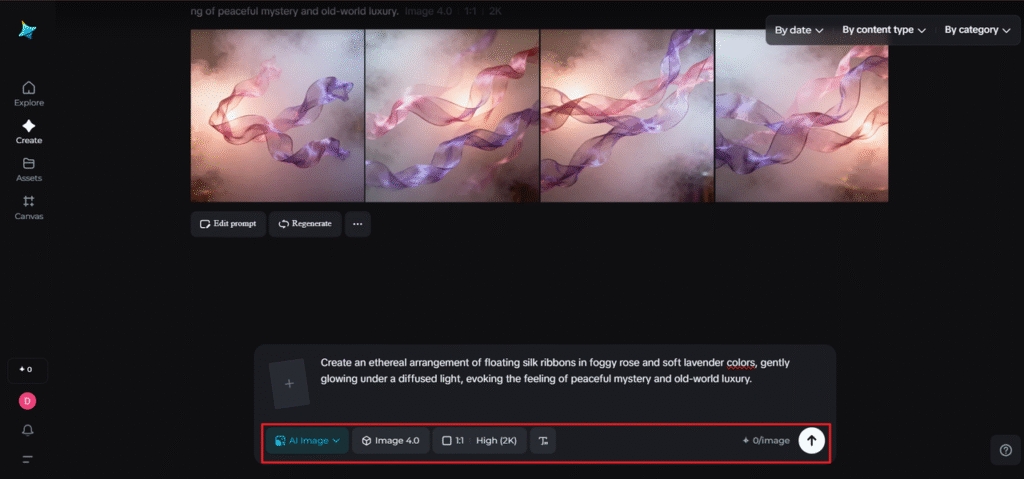
An example: an ethereal arrangement of floating silk ribbons in foggy rose and soft lavender colors, gently glowing under a diffused light, evoking the feeling of peaceful mystery and old-world luxury.
This kind of prompt allows Dreamina to understand tone and atmosphere and facilitates the transformation of the inexpressible emotional narrative into subjective visual direction.

Step 2: Modify parameters and generate
Fine-tune your setup by selecting the model you require, along with the aspect ratio, size, and choice of 1k / 2k resolution as needed. Next, at the bottom, click Dreamina’s icon to generate your image.
It will appear as if generated from a moodboard from another world— as a picture field that expresses your emotional intention visually. It isn’t simply color, it is sensation made into pixels.
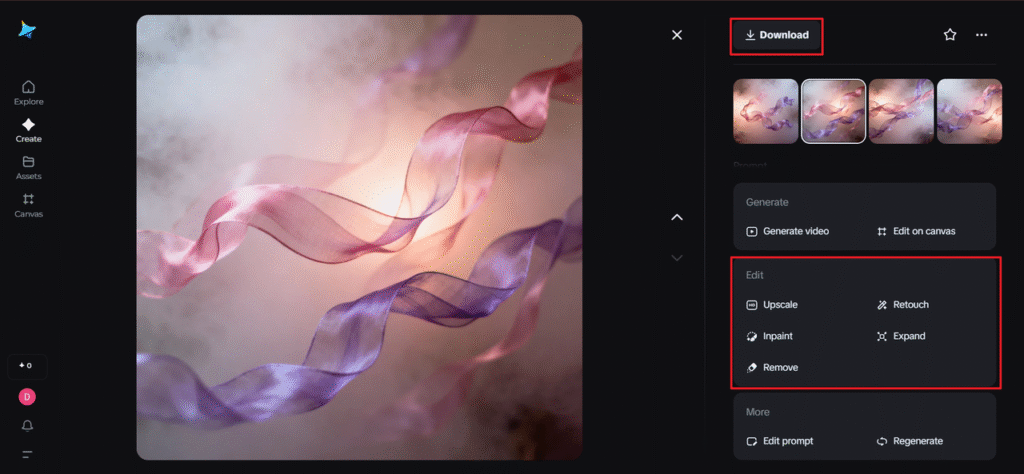
Step 3: Refine and download
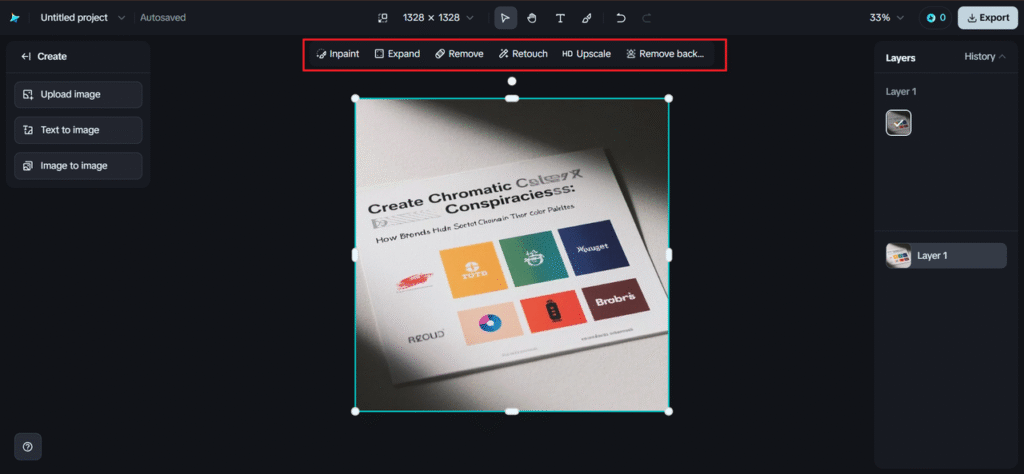
After your image is prepared, finish it with Dreamina’s artistic customization features. Apply inpaint to enhance details, expand to increase your canvas size, remove to eliminate distractions, or retouch to smooth out visual texture.
Once your palette and tone match your vision, click “Download” to save. You now have a high-quality piece representing your brand’s underlying mood in color—it’s a secret code to be deciphered by the eye.
The emotional palette playbook
Color design is not a game of guesswork—it’s an emotional map. Strategically applied, it can quietly alter how audiences perceive tone, quality, and intention.
Here’s how brands manipulate perception behind the scenes through chromatic conspiracies:
- Temperature manipulation: cool colors imply intelligence and calm; warm colors invoke comfort and urgency.
- Progressive narration: gradual fade-ins mimic emotional progression, e.g., hope turning into contemplation, or tension dissipating into relief.
- Contrast as personality: snappy color breaks suggest confidence, while subtle transitions suggest empathy.
- Hidden accents: hints of unexpected tones keep it all psychologically interesting.
Each of these strategies moves color from decoration to narrative—allowing spectators to feel the brand before the brand enters their mind.
Colors went from just sitting there to really pulling at your feelings
In the branding setup of the future, colors do not stay the same anymore. They shift around. They adjust to whatever is going on. You see it on screens. In animations too. Even when you cross time zones.
Dreamina’s creativity is dynamic in the same way. By imagining how gradients could move or how light dances over texture, you can envision your brand’s personality as something breathing and living.
Hidden hues in visual storytelling
Picture color like that quiet voice in the back of your campaign mind. You know the one. A good palette pulls up smells or feels of heat or cold. Even old memories pop in there sometimes. That is where sensory storytelling lives—especially when refined by Dreamina’s AI image editor, which allows you to adjust colors and contrasts with surgical accuracy.
Here are a few examples of how colors can trigger emotions when you manipulate them a bit:
- Blanched pinks mixed in with misty gray, they kind of evoke this soft nostalgia thing.
- Pointed golds set against charcoal black, which implies a sense of contemporary luxury, pretty much.
- Profound cyan, combined with mellow sand hues it conveys confidence and some intrigue.
With Dreamina, creators are able to craft these subtleties without strict color wheels—simply emotion, language, and AI instinct.
The poetry within the pixels
The genius of color conspiracies is that they’re hidden in plain sight to everyone. Individuals don’t even know they’re interpreting color language while scrolling or shopping—but they are. Each tint kind of pulls out those feelings in people. Each contrast really shapes a certain sentiment.
Dreamina, you know, that’s where art and emotion come together. It lets designers dig into these hidden layers. They can do it without losing that spontaneous vibe. Basically, it helps you create designs that hit not just the eyes. They reach the subconscious too. That’s the spot where loyalty lives. Nostalgia hangs out there. Intrigue really takes hold.
Conclusion: Every color hides a story
In the end, strong branding isn’t some loud shout. It’s more like a whisper. Colors whisper. Gradients hum. A color scheme can hold generations of history in the brevity of a single color.
Dreamina knows that design is a conversation between the seen and the felt. With its AI photo maker, AI logo maker, and AI picture editor, it turns color from form to function—enabling creators to discover the emotional codes that make brands indelible.
Because the greatest color conspiracies aren’t designed to be seen.
They’re designed to be sensed.
